
Project Description
Bitcoin Mining Explained
Bitcoin mining is the process of creating new bitcoins by solving complex mathematical problems that verify and add transactions to the Bitcoin blockchain. Miners use specialized hardware known as ASICs (Application-Specific Integrated Circuits) to perform these calculations at high speeds. When a miner successfully solves a problem, they add a new block to the blockchain and receive a reward in the form of newly created bitcoins. This process not only generates new bitcoins but also ensures the security and integrity of the Bitcoin network by making it computationally impractical for any single entity to alter the blockchain.
Mining requires significant computational power and energy consumption, making it a resource-intensive activity. Miners often join mining pools to combine their processing power and share rewards proportionally. As Bitcoin’s popularity has grown, so has the difficulty of mining, leading to increased competition and innovation in mining technology.
Transaction Earnings on the BTC Network
Transaction earnings on the Bitcoin network come from two primary sources: transaction fees and block rewards. Here’s how each works:
Transaction Fees
When users send Bitcoin transactions, they can include a transaction fee. This fee incentivizes miners to prioritize their transaction over others waiting to be processed. The higher the fee, the quicker the transaction is likely to be included in the next block. These fees are collected by the miner who successfully mines the block that includes the transaction. Transaction fees can vary based on network congestion; during periods of high activity, fees tend to increase as users compete for block space.
Block Rewards
Miners are also rewarded with newly created bitcoins for each block they successfully mine. This block reward serves as an incentive for miners to contribute their computational power to the network. Initially, the block reward was 50 bitcoins, but it halves approximately every four years in an event known as the “halving.” After the last halving event on April 20, 2024, the block reward is 3.125 bitcoins per block. This mechanism ensures a gradual decrease in the rate at which new bitcoins are introduced into circulation, contributing to Bitcoin’s scarcity.
Calculation Example
To illustrate, when a group of miners successfully mines a block, they receive the block reward (currently at 3.125 BTC) plus any transaction fees included in that block. If a total transaction fees amount to 0.0315 BTC and it takes 10 minutes to mine a block, this group of miners earn a total of :
3.1565 BTC in 10 minutes = block reward of 3.125 BTC + transaction fee of 0.0315 BTC
If there are 2,000,000 miners involved in this, each miner earns a total of :
0.00000157825 BTC in 10 minutes = 3.1565 BTC earned by the group divided by 2,000,000 miners.
Economic Impact
The combination of block rewards and transaction fees creates a robust incentive system for miners, securing the network and validating transactions. As the block reward continues to halve, transaction fees are expected to play a more significant role in compensating miners.
Considerations for the Future
As Bitcoin’s network grows, several factors will influence transaction earnings:
- Network Congestion: With increased adoption, the demand for transactions may rise, leading to higher transaction fees.
- Technological Advancements: Innovations like the Lightning Network aim to increase transaction speed and reduce fees, potentially impacting miners’ earnings.
- Regulatory Changes: Evolving regulations may affect the profitability and operations of miners globally.
Note: These transaction fees are sent to the pool and accounted for as part of the fund’s and investors’ income and are not separate at any time.

Project Description and Procedure
VDIF had previously operated since January 2020 in Kazakhstan** as the Proof of Concept (POC). The ASIC computer chips used in the miners were originally designed in Beijing and manufactured by an established and public chip/wafer manufacturer in Taiwan. The machines were then assembled in Taiwan by a well-known international brand and shipped to Shenzhen, China for testing. After testing the machines (miners), they were sent by air with no VAT or customs to Almaty, Kazakhstan. Within a few days after arriving, the miners started operating in our mining / hosting partner’s facility in Kazakhstan. All aspects of the shipment were insured for protection.
The biggest obstacles to success at that time was obtaining quality equipment at a reasonable price within a short delivery window and having hosting facilities available with a low energy cost in a legal, trustworthy environment. In the past due to poor market conditions in digital currency mining in 2017, there had been a limited production of chips/wafers which has resulted in a shortage of equipment of the latest models. Much of the supply issue has now been alleviated, as of Q1 2025. In addition, resellers tend to manipulate prices, equipment specs, and overall availability. VDIF has made a policy of only purchasing OEM equipment after meeting the principals or executives of the respective manufacturers before a purchase and following through on the entire delivery process. VDIF is fully aware of changing import and customs rules and laws such as a recent FCC action directing US customs to hold certain miners, (due to its chips) before entry. The fund always keeps abreast of import rules, regulations, and stipulations to assure purchasing, shipment, import, delivery and installation are seamless for its investors.
** The Kazakhstan POC operation was setup under a separate legal entity in the Republic of Kazakhstan. The entity is now dormant and has no direct or indirect involvement with VDIF.
Expected Results Following Implementation of POC
The expected results for shareholders were all positive after implementation and connection to a “mining pool.” These pools permitted our firm to be on a preferential network to assure we process transactions efficiently and be placed on a more established network allowing greater revenue potential.
POC (Proof Of Concept) Real Life Example
Investor A invested USD 19,200 in Q4 of 2019 to purchase 10 units of Whatsminer M21s. The miners were placed in a secured hosting facility and have been mining BTC since January 12th, 2020. As of December 31st, 2020, Investor A has accumulated 0.72184 BTC YTD from mining. At the market price of USD 37,017 per BTC, this equates to USD 26,721. Investor A’s BTC is currently securely stored in the Company’s wallet pending Investor A instruction for distribution. The investor has already recuperated his initial investment in Q4 2019 with a ROI (return on investment) of 39% in 15 months. This represents Accumulated Return on Asset (ROA) of 139%.
Investor B invested $38,400 and did not take any distributions. At the conclusion of the POC in mid 2022, due to regulatory changes in Kazakhstan, the investor has 1.38 BTC which is equivalent to $139,053. as of Jan 16, 2025. This represents an Accumulated Return on Asset (ROA) of 362% or average annual return for 3 years at 120%. Obviously, Past performance is not indicative of future results.
The fund generally aims to or recommends that investors receive or recoup 80% of their investment and reinvest 20% into new equipment, subject to availability.
- The fund’s operating expenses include electricity, mining pool fee, custodian & fund administrator fee, etc. The fund expects to bring these to more competitive levels as we scale the business and the fund.
- The Investor has an option of selling their equipment to the market. If the equipment is sold within the 2-year lockup period, an early redemption fee of 5% may be charged by the fund.
- VDIF does not take additional fees on the equipment purchase or re-sale.
- Full financial models including further sensitivity analysis, respective financial returns (i.e., IRR, NPV, etc.) are available upon request.
Investor Demand and Revenue Model
As mentioned previously, investors are seeking passive BTC income within an alternative asset class. Using secured, insured facilities with trusted partners in developed regions such as North America allow VDIF to provide exposure to the alternative asset class within a off-shore security offering.
Financials are for illustrative purposes only and are of speculative nature. It is not a guarantee of the price of the Bitcoin miner or return of investor’s investment. Analysis was done in March 12, 2025.
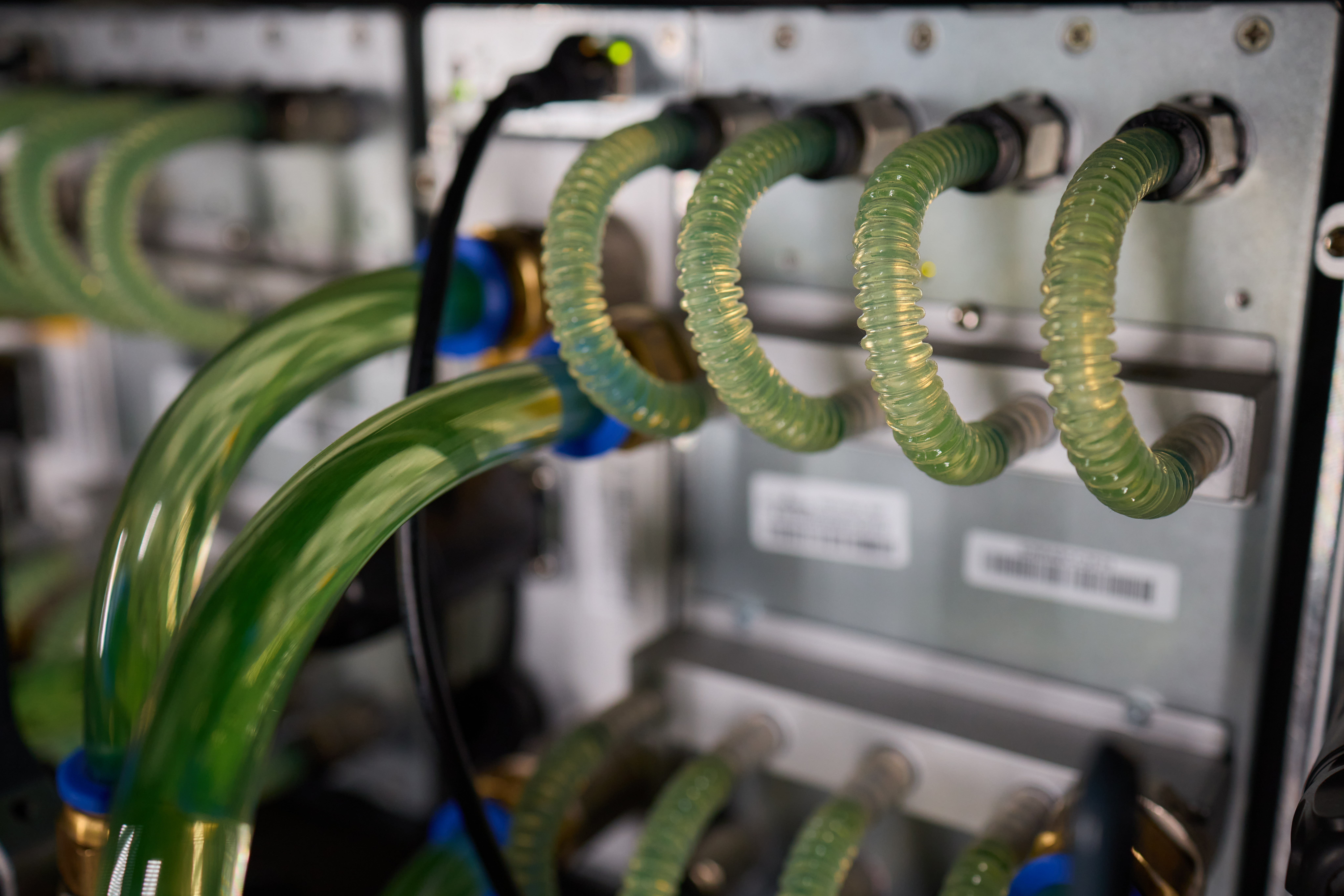
- An investor invests USD 104,500 into the fund. The fund manager purchases approximately 11 units of Bitmain S21 Hydro miner (inclusive of all shipping, tariffs etc. cost). The manufacturer standard specifications on S21 Hydro is 319TH/s with power consumption of 5104 watt.
- The resulting net profit is defined as BTC earned from mining and deduct expenses for pool fee, electricity cost, custodian & fund administrator fee, annual audit etc. As such, mining machine will generate net profit as follows :
- Each miner’s monthly net profit will be USD 130.44 and yearly net profit will be USD 1,587. (BTC price at USD 82,305 as of March 12, 2025)
- For 11 machines, the combined net profit will be USD 17,458 yearly (at BTC price of USD 82,305). VDIF will take 20% of net profit. Investor’s net return (i.e. 80% of net profit) is USD 13,966 or annual ROA (return of asset) of 13.3%.
- If BTC price reaches USD 95,000, the combined net profit of the 11 machines will be USD 25,840 yearly. Investor’s net return (i.e. 80% of net profit) is USD 20,672 or annual ROA (return of asset) of 19.8%.
- If BTC price drops to USD 70,000, the combined net profit of the 11 machines will be USD 9,333 yearly. Investor’s net return (i.e. 80% of net profit) is USD 7,466 or annual ROA (return of asset) of 7.1%.
- If BTC price reaches USD 95,000, the combined net profit of the 11 machines will be USD 25,840 yearly. Investor’s net return (i.e. 80% of net profit) is USD 20,672 or annual ROA (return of asset) of 19.8%.
- Each miner’s monthly net profit will be USD 130.44 and yearly net profit will be USD 1,587. (BTC price at USD 82,305 as of March 12, 2025)
Important Risk Considerations
The fund's previous performance is neither an indication, nor a guarantee for future financial performance.
The investment’s performance is determined by the underlying value of (BTC). Returns are therefore subject to rapid & extreme volatility. For example, in May 2017, one unit of BTC traded for roughly $1,400. In December 2017, it was $19,800. On July 5, 2020, BTC price was around $8,977, representing a drop of over 54% since Dec 2017. On December 31, 2024, BTC price was $93,429.
Investors may experience substantial losses of their investment due to market risk and volatility. Investors should not base their investment decisions solely on the information provide on the website and should consider all the risks applicable to the market.
The fund’s earnings is a result of Bitcoin Mining on the Blockchain. The Blockchain Network hash rate varies over time and subject to difficulty level. VDIF has no control or influence over the Blockchain Network.